

2026 Overtime Tax Law Changes: What Employers Need to Know (and Steps to Take)
A major shift is coming to how overtime pay gets taxed, and it affects every employer with hourly workers. The "No Tax on Overtime" provision, part of the One Big Beautiful Bill Act, introduces new tax benefits for employees: and new responsibilities for employers starting in 2026.
If you're running a business with hourly employees, here's what you need to know about these changes and how to prepare your payroll systems.
What's Changing: The "No Tax on Overtime" Law
Starting with the 2025 tax year, eligible employees can deduct the premium portion of their overtime pay from their federal taxable income. This means the "time-and-a-half" extra pay (the ".5" part) may not be subject to federal income tax for many workers.
The deduction applies to non-exempt hourly employees under the Fair Labor Standards Act (FLSA) who earn qualifying overtime at a higher rate than their regular wages. Essentially, if your employee works more than 40 hours and gets paid time-and-a-half, they might qualify for this tax break.
But here's the key part for employers: while employees get the tax benefit, you're responsible for tracking and reporting this information correctly.
Employee Deduction Limits and Eligibility
The overtime tax deduction isn't unlimited. Here are the caps:
- Individual employees: Up to $12,500 in premium overtime pay annually
- Married filing jointly: Up to $25,000 per couple
The benefit phases out for higher earners:
- Single filers: Begins phasing out at $150,000 in modified adjusted gross income
- Joint filers: Begins phasing out at $300,000
Important note: employees still pay Social Security, Medicare, and state/local taxes on their overtime income. This deduction only applies to federal income tax.

2025: The Grace Period
Good news for 2025: the IRS is giving employers a break. This year is considered a transition period, meaning you won't face penalties if you can't provide the separate breakdown of overtime compensation on W-2 forms.
However, this doesn't mean you should wait. Smart employers are using 2025 to prepare their systems and processes for the requirements that kick in next year.
2026: New Reporting Requirements You Can't Ignore
Starting with W-2 forms issued in January 2027 (for tax year 2026), employers must implement new reporting procedures. Miss these requirements, and you could face penalties ranging from $60 to $680 per incorrect or incomplete W-2.
Box 12 Reporting Changes
You'll need to use new codes in Box 12 of Form W-2:
- Code TT: Report the total amount of qualified overtime compensation each employee earned
- Code TP: For tipped employees, report qualified tip income
Box 14b Reporting
For employees in tipped occupations, you must report the Treasury Tipped Occupation Code in Box 14b. This helps the IRS identify which employees work in positions where tips are customary.
Record-Keeping Requirements
You'll need to maintain detailed records of:
- Regular hours worked vs. overtime hours
- Base pay rates and overtime rates
- Premium overtime compensation (the extra ".5" portion)
- Employee eligibility status under FLSA
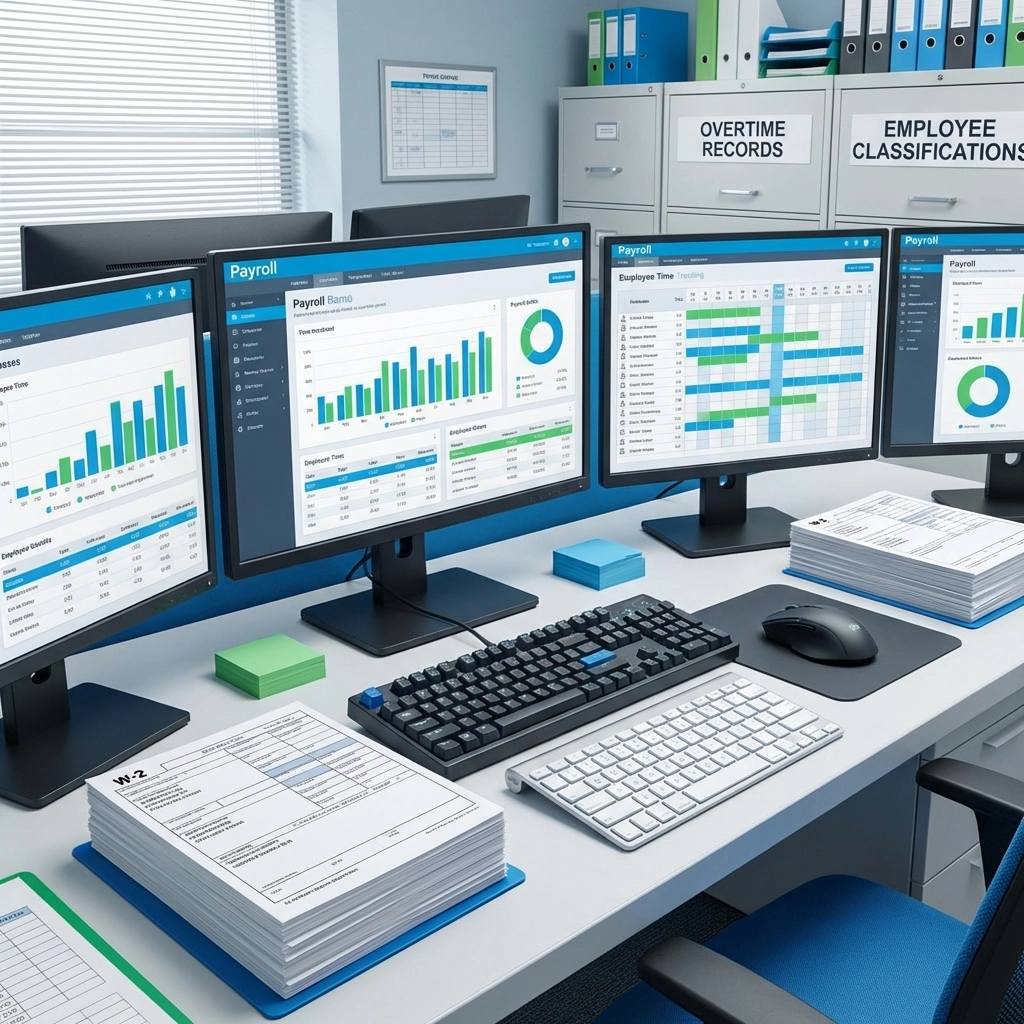
Steps to Take
- Track overtime now: Separate regular hours, overtime hours, and the premium ".5" portion. Keep weekly records of rates and hours so 2026 W-2 reporting is straightforward.
- Update payroll settings: Make sure your payroll software can track the premium overtime amount and produce the new W-2 codes when available.
- QuickBooks Online Payroll: Add the "Qualified OT Tracking" payroll type to each eligible employee, then run a sample payroll to verify the premium amount totals separately.
- Test your reports: Run sample reports to confirm the qualified overtime totals are separated and ready to flow to Box 12 once your provider releases the 2026 update.
- Train your team: Show whoever runs payroll how to enter overtime and where the new premium totals appear.
- Reach out for help: Not sure you're set up right? Contact Books on the Go CPA Firm and we can configure your payroll and create a simple checklist for your process.
Action Steps for Employers
Update Your Payroll Systems
Most employers will need to upgrade their payroll software to handle the new tracking and reporting requirements. Your system needs to:
- Separately track regular pay and premium overtime pay
- Calculate the deductible portion of overtime compensation
- Generate the new W-2 codes automatically
- Maintain detailed records for IRS compliance
QuickBooks Online Payroll Users
If you're using QuickBooks Online Payroll, here's a specific action item: add the "Qualified OT Tracking" payroll type to each eligible employee's profile. This ensures your system properly tracks overtime compensation that qualifies for the tax deduction.
Not sure how to set this up? Don't worry: we can walk you through the process.
Review Employee Classifications
Double-check that your hourly employees are properly classified as non-exempt under FLSA. Only non-exempt employees are eligible for the overtime tax deduction, so accurate classification is crucial for compliance.
Update Employee Communications
Your employees need to know about this potential tax benefit. Consider:
- Adding information to your employee handbook
- Sending out a company-wide email explaining the changes
- Updating new hire orientations to include overtime tax information
Many employees may want to adjust their W-4 withholding to account for the potential deduction, so be prepared to handle those requests.
Penalties for Non-Compliance
The IRS isn't playing around with these new requirements. Starting in 2026, penalties for incorrect or incomplete W-2 reporting include:
- $60 per form if corrected within 30 days
- $120 per form if corrected by August 1st
- $680 per form for forms not corrected or corrected after August 1st
With maximum penalties reaching hundreds of thousands of dollars for larger employers, getting this right is essential.

The Bottom Line for Business Owners
These overtime tax law changes represent the biggest shift in payroll reporting requirements in years. While the tax benefits go to employees, the compliance burden falls squarely on employers.
The key is preparation. Use 2025 to get your systems ready, because once 2026 hits, there's no grace period for mistakes.
Remember, this deduction is currently scheduled through tax year 2028, so these aren't temporary adjustments: they're the new normal for payroll compliance.
Need Help with Your Payroll System Updates?
Navigating new tax law requirements can feel overwhelming, especially when penalties are involved. Whether you're using QuickBooks Online Payroll or another system, having the right setup is crucial for compliance.
Need help updating your payroll system for these 2026 changes? Reach out to Books on the Go CPA Firm for guidance. We can help ensure your business stays compliant while your employees get every tax benefit they deserve.
The overtime tax law changes are coming whether we're ready or not. The question is: will your business be prepared? Start planning now, and you'll handle 2026 with confidence instead of scrambling to catch up.
