
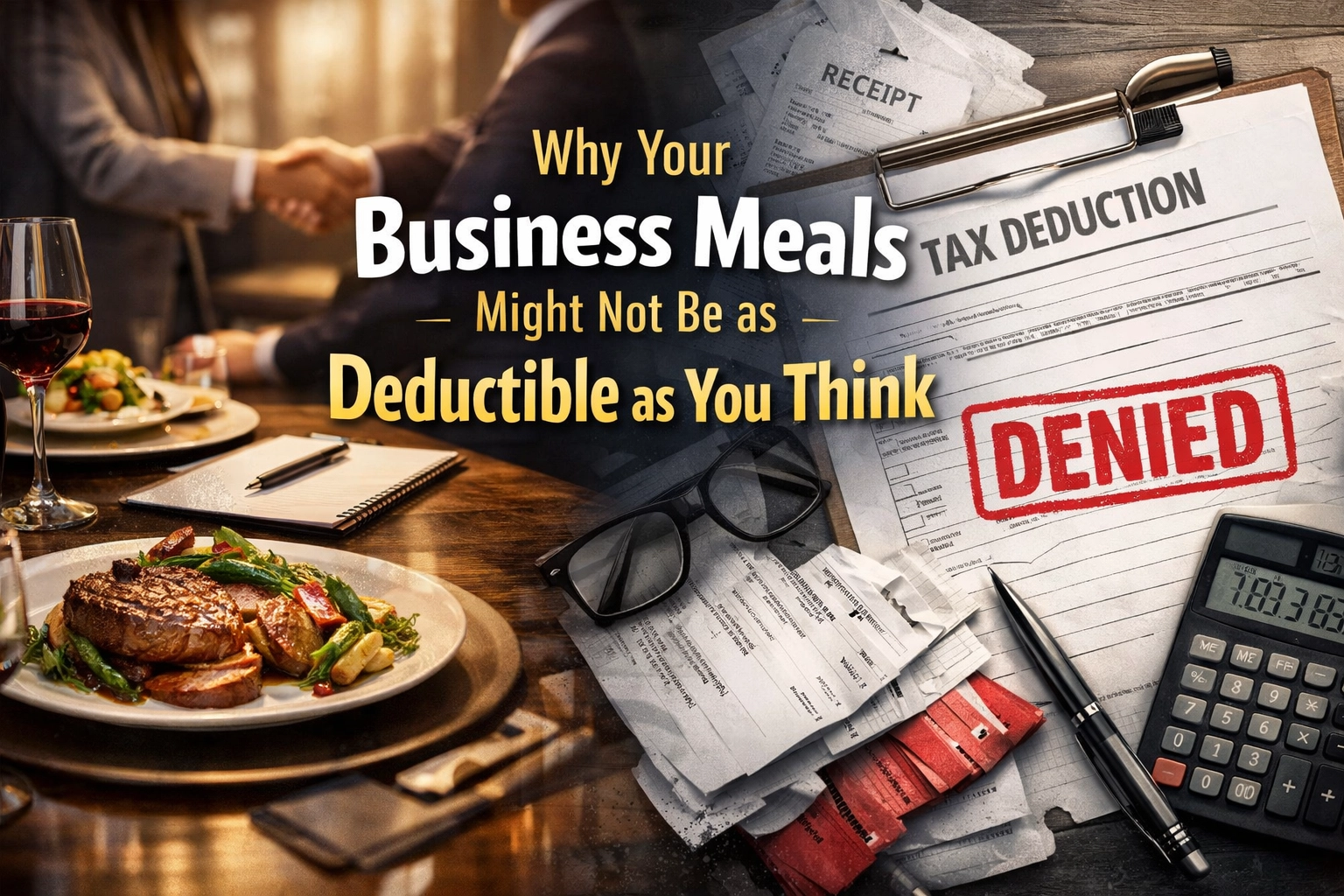
Why Your Business Meals Might Not Be as Deductible as You Think
Hey there! If you’re a business owner, you’ve probably had that moment at a restaurant where you tap your card, grab the receipt, and think, “Sweet, Uncle Sam is picking up half the tab for this.”
Well, I hate to be the bearer of bad news, but as of 2026, those rules have shifted quite a bit. What used to be a "gimme" deduction might now be a big fat zero on your tax return. Here at Books on the Go CPA Firm, we’re all about keeping things simple, so I’m going to break down exactly what you can (and can’t) deduct this year without the headache of "CPA-speak."
The Golden Rule: Business vs. Personal
Before we dive into the percentages, let’s get the basics straight. For a meal to even be considered a business expense, it has to be "ordinary and necessary" for your trade or business.
That means you can’t just go out to lunch by yourself and call it a business expense because you were "thinking about work." You need to be actively conducting business, meeting a client, or traveling away from home for work. If it's just you and a sandwich at your desk, that's a personal expense, and it's not going on the tax return.
The Biggest Change in 2026: The "Convenience" Trap
If you’ve been in business for a while, you probably remember the days when you could deduct 50% of the coffee, snacks, and "working late" meals you provided for your team.
That has changed.
As of January 1, 2026, meals provided for the "convenience of the employer" are now 0% deductible. This is a huge shock for many business owners. In the past, if you kept your employees on-site by providing a subsidized cafeteria or snacks in the break room to keep productivity high, you could at least write off half of it.
Now? It’s considered a non-deductible fringe benefit. This includes:
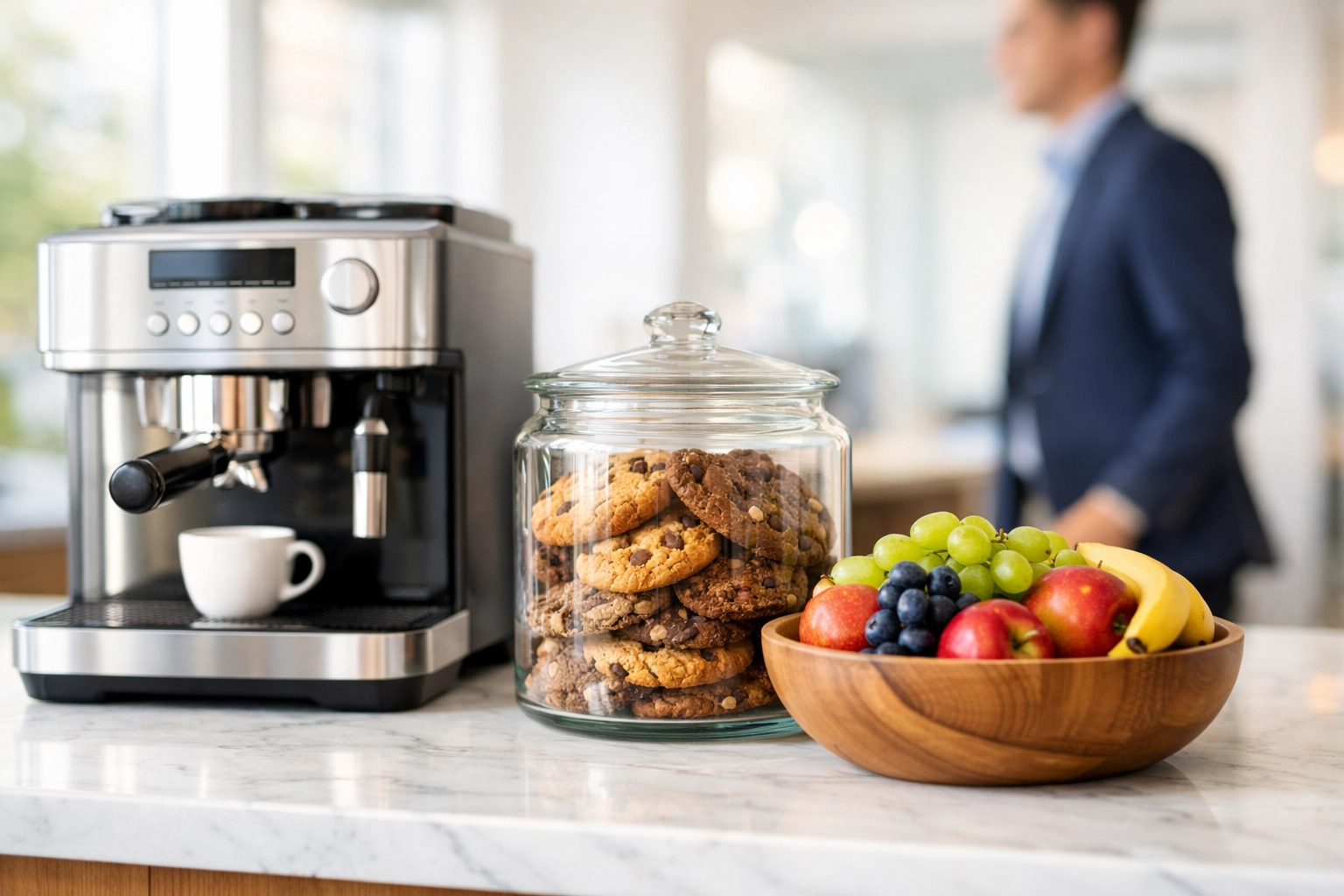
- Coffee and drinks in the break room.
- Snacks and fruit baskets for the office.
- Meals brought in for standard staff meetings.
- Dinner provided to employees who are working late.
Basically, if the food is meant to keep people working at their desks or staying in the office, the IRS isn't giving you a tax break for it anymore. You can still provide these perks: and they're great for morale: but they won’t lower your tax bill.
What Is Still 50% Deductible?
Don't worry, the meal deduction isn't totally dead. The classic "business meal" still holds some weight. You can generally deduct 50% of the cost of meals if:
- A company representative is present: You (the owner) or an employee must be at the table.
- It’s with a business contact: This includes current clients, potential prospects, consultants, or vendors.
- It’s not lavish or extravagant: You don’t have to eat at a fast-food joint, but don't expect the IRS to look kindly on a $5,000 bottle of wine for a routine check-in.
- Business is discussed: You need to have a legitimate business purpose for the meeting.
This 50% rule also applies to meals you eat while traveling for business. If you’re at a conference or visiting a client out of state, your solo meals are generally 50% deductible because you’re "away from home" for work.
For more details on how we handle these classifications, check out our services page.
The "Big Zero": Entertainment
This is the one that still trips people up because it feels like it should be deductible.
"Entertainment" is 0% deductible. Period.
It doesn't matter if you’re taking your best client to a basketball game to sign a million-dollar contract. The tickets are $0 deductible. The same goes for:
- Golf outings.
- Concert tickets.
- Country club dues.
- Skyboxes or suites at stadiums.
- Fishing trips.
Pro-Tip: If you go to a game with a client and buy hot dogs and beers, you might be able to deduct 50% of the food and drink: but only if they are purchased separately from the tickets and the cost is listed as a separate line item on the receipt. If the food is included in the ticket price, the whole thing is 0% deductible.
The "100% Club": When You Get a Full Deduction
Everyone loves a 100% deduction. While these are rarer, they are still very much alive in 2026. You can typically deduct the full cost (100%) of:
- Company Holiday Parties: The annual holiday bash or the summer company picnic is 100% deductible as long as it's open to all employees and isn't just for the execs.
- Meals Treated as Compensation: If you include the value of the meal in the employee’s W-2 wages, you can deduct the cost. (Though most employees won't thank you for the extra tax on their paycheck!)
- Food for the General Public: If you’re having a grand opening and you provide free snacks or a food truck for anyone who walks in, that’s a promotional expense and is 100% deductible.
- Community Events: Participating in things like a local "Trunk-or-Treat" or a charity fundraiser where you provide food is often fully deductible as a marketing or charitable expense.
We love staying connected with the local business community and supporting events and initiatives throughout the year.
Why Documentation is Your Best Friend
You could have the most legitimate business meal in the history of the world, but if you don't have the paperwork to prove it, an IRS auditor can throw it out in a heartbeat.
We always tell our clients at Books on the Go CPA Firm that a receipt isn't enough on its own. You need to document the "Who, What, Where, and Why."
- Who: Who did you eat with? (Name and business relationship).
- What: What was the total cost? (Keep the itemized receipt, not just the credit card slip).
- Where: The name of the restaurant or location.
- Why: What was the business purpose? ("Discussed Q3 marketing strategy" is better than "Lunch").

I highly recommend using an app to scan receipts the moment you get them. Or, if you’re old school, just write the details on the back of the receipt before you put it in your wallet. If you wait until tax season to remember who you ate lunch with back in March, you’re going to have a bad time.
If you're feeling overwhelmed by the record-keeping side of things, our QuickBooks training can help you set up a system that does the heavy lifting for you.
Quick Cheat Sheet for 2026
| Expense Type | Deduction % | Notes |
|---|---|---|
| Client Business Meal | 50% | Representative must be present. |
| Business Travel Meals | 50% | While away from home on business. |
| Employee Office Snacks | 0% | New for 2026 – no longer deductible. |
| "Convenience" Meals | 0% | Lunch provided so staff stays at desks. |
| Annual Holiday Party | 100% | Must be for all employees. |
| Client Entertainment | 0% | Tickets, golf, etc. |
| Public Promotion Food | 100% | Example: Food at a grand opening. |
The Bottom Line
Tax laws are constantly evolving, and 2026 has certainly thrown a wrench into the way we think about office perks. While it's a bummer that the break room coffee isn't helping your tax bill anymore, knowing these rules now helps you plan your budget more effectively.
Don't let these changes scare you away from networking or taking care of your team. Just make sure you’re categorizing things correctly in your books so there are no surprises when April rolls around.
If you’re unsure about a specific expense, we’ve got plenty of resources in our article library or you can check out our latest tax tips.
And remember, we’re always here to help you navigate the tricky stuff. Whether you need a 30-minute tutorial to get your books in order or full-scale advisory services, we’ve got your back.
Stay hungry (and stay compliant!),
Millicent Dotson
CEO, Books on the Go CPA Firm
